
Uncategorized
Precision Tooling for Modern Vehicle Production
Precision Automotive Injection Mold Manufacturer for High-Performance Parts
Automotive injection mold manufacturer is the backbone of vehicle production, turning raw plastic into precision car parts. It works by injecting molten material into custom steel cavities to create everything from dashboards to bumpers. This process delivers unmatched durability and repeatability for high-volume components. Just supply the CAD design and material specs, and the manufacturer handles the entire tooling and production run.

Precision Tooling for Modern Vehicle Production
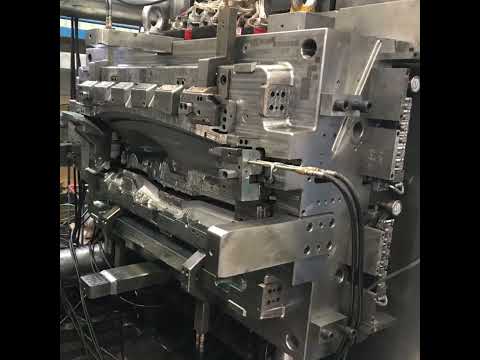
Precision tooling from an automotive injection mold manufacturer directly dictates the fit, finish, and structural integrity of every plastic component in a modern vehicle. You must specify multi-axis EDM and high-speed machining for your mold cores and cavities to achieve the tight tolerances required for lightweight, complex geometries like intake manifolds or structural brackets. Insist on conformal cooling channels directly within the tool steel to drastically reduce cycle times and prevent warpage in large body panels. Neglecting the steel’s thermal coefficient alignment with your resin’s shrinkage rate introduces subtle, compound dimensional errors across a high-volume production run. Ultimately, your PM layout and gating strategy at this stage define the repeatable sub-micron precision that enables durable, crash-safe components without secondary finishing.
Why Specialized Molds Are Critical in Car Part Manufacturing
Specialized molds are critical in car part manufacturing because they enable the precise replication of complex geometries required for functional vehicle components. Unlike generic tooling, these molds incorporate advanced cooling channels and lifters to manage the demanding tolerances of under-hood parts or intricate interior trim. Without this specificity, high-stress applications like engine brackets or sensor housings would suffer warpage or dimensional failure. This precision directly supports seamless assembly line integration, as each part must fit without secondary machining. Specialized molds also dictate material flow for reinforced plastics, ensuring structural integrity in safety-critical components. Ultimately, they eliminate costly trial-and-error, making consistent production of airtight or load-bearing automotive parts achievable from the first shot.
Key Differences Between Standard and Automotive-Grade Molds
Automotive-grade molds diverge from standard molds primarily through steel selection and thermal management systems. Standard molds often use pre-hardened P20 steel, adequate for low-volume production. In contrast, automotive-grade molds demand high-grade H13 or S7 tool steel, capable of enduring millions of cycles under high clamping pressures without deformation. Cooling channels in standard molds are simple drilled lines; automotive molds employ conformal cooling, following the cavity geometry for uniform heat extraction. This reduces cycle times by up to 30% and prevents warpage in large components like dashboards. While standard molds may use standard ejector pins, automotive applications necessitate heavy-duty guided ejection and slide systems to handle complex undercuts. The precision tolerance also shifts: standard molds operate at ±0.1 mm, but automotive-grade molds require ±0.02 mm for Cpk-verified, repeatable part dimensions.
| Aspect | Standard Mold | Automotive-Grade Mold | |
| Steel | P20 (pre-hardened) | H13/S7 (high-hardness) | |
| Cooling | Drilled straight channels | Conformal cooling | |
| Tolerance | ±0.1 mm | ±0.02 mm | |
| Ejection | Standard pins | Guided, heavy-duty | |
| Cycle Life | <500,000 shots | >1,000,000 shots |

Materials Engineered for High-Performance Molds
For an automotive injection mold manufacturer, materials engineered for high-performance molds are the backbone of producing durable, precision parts. You’ll rely on hardened tool steels like H13 or S7 to withstand the punishing cycles of high-volume production, while copper alloys can be strategically inserted to pull heat faster from thick sections. Selecting the right alloy directly impacts cycle time and the final surface finish of the bumper or dashboard. A balanced mold core using beryllium-free bronze ensures longer tool life without sacrificing thermal conductivity. It’s worth remembering that the subtle choice between a P20 and an H13 steel can determine whether your mold survives a million shots or fails early from heat checking. Ultimately, engineered materials let you shave seconds off each cycle while maintaining the tight tolerances automotive clients demand.
Selecting Steel Alloys for Durability and Heat Resistance
For high-performance molds, selecting steel alloys focuses on balancing wear resistance against thermal fatigue. Pre-hardened P20 offers adequate durability for low-volume runs, while H13 tool steel is preferred for its hot hardness and resistance to heat checking under cyclic high temperatures. For extreme heat exposure, such as in glass-filled nylon injection, premium grades like S7 or A2 deliver superior compressive strength. The critical factor is matching the alloy’s tempering stability to the molding temperature; exceeding the alloy’s threshold accelerates cracking. H13 tool steel remains the industry standard for durability in steel selections targeting extended mold life.
| Alloy | Durability Characteristic | Heat Resistance Limit |
|---|---|---|
| P20 | Good machinability, moderate wear | ~300°C (softens above) |
| H13 | Excellent thermal fatigue resistance | ~600°C (maintains hardness) |
| S7 | High impact toughness | ~500°C (resists shock) |
Advanced Coatings That Extend Mold Lifespan
Advanced coatings like diamond-like carbon (DLC), titanium nitride (TiN), and chromium nitride (CrN) are applied to automotive injection molds using physical vapor deposition (PVD) or chemical vapor deposition (CVD) processes. These coatings create a hard, low-friction surface that resists abrasive wear from glass-filled nylons or corrosive gases from engineering plastics. By reducing surface adhesion, coatings prevent material buildup on cavity walls, allowing for extended production runs without polishing downtime. For high-cavitation tooling, a multi-layer ceramic coating can double the lifespan of critical core pins and inserts by withstanding thermal cycling fatigue.
Role of Beryllium Copper in Rapid Cooling Applications
In high-performance molds from an automotive injection mold manufacturer, beryllium copper inserts play a critical role in rapid cooling applications by offering thermal conductivity five to ten times higher than standard tool steels. This property allows heat to be drawn away from the mold surface significantly faster, reducing cycle times for components like engine housings and interior trim. The material is typically placed in deep core sections or hot spots where conventional water lines cannot reach, ensuring uniform temperature distribution and preventing warpage in complex geometries. Beryllium copper core pins are especially effective for cooling thick cross-sections, enabling consistent material shrinkage and faster part ejection.

Q: How does beryllium copper reduce cycle time in rapid cooling?
A: Its high thermal diffusivity transfers heat rapidly from the polymer melt to the mold coolant, allowing the molded part to solidify in up to 50% less time compared to steel inserts.
Designing Molds for Complex Automotive Components
In the engineering bay, we’re huddled over a mold design for a thin-walled dashboard carrier, accounting for six different-grade polymers in a single tool. The core challenge is managing anisotropic shrinkage while integrating snap-fit bosses for automated assembly. How do you ensure zero warpage on a 1.2-meter-long component with variable wall thickness? We run iterative mold-flow simulations, then adjust gate placement and cooling-channel layout to balance fill and thermal stress. Every draft angle and ejector-pin location is calculated against the part’s final tolerance—critical for a structural instrument panel that must snap into a vehicle frame without fasteners. This mold isn’t just a cavity; it’s a precision-manufactured solution for high-volume, repeatable production of complex automotive geometry.
Managing Tight Tolerances in Bumper and Dashboard Tooling

Managing tight tolerances in bumper and dashboard tooling demands precision in cooling channel placement and steel selection to counteract warpage in large, thin-wall geometries. For bumpers, shrinkage compensation strategies must be programmed into core and cavity steel before machining, often requiring multi-axis EDM for critical fit zones. Dashboard tooling relies on conformal cooling inserts to maintain uniform material flow across complex curves, preventing sink marks at grain lines. Tolerances within ±0.05 mm are achieved through iterative mold tryouts, with real-time pressure sensors adjusting holding pressure to lock dimensions.
Managing tight tolerances in bumper and dashboard tooling hinges on controlled cooling, multi-axis machining, and real-time pressure adjustments to FOX MOLD plastic injection mold manufacturer prevent warpage and hold ±0.05 mm precision.
Multi-Cavity and Family Mold Configurations for Efficiency
For high-volume automotive production, a mold manufacturer leverages multi-cavity and family mold configurations to dramatically boost throughput. A multi-cavity setup duplicates the same part across several identical impressions, ideal for mass-producing clips or fasteners. Conversely, a family mold integrates different components of an assembly—like a dashboard bracket and its mount—into a single cycle. This eliminates secondary assembly steps and reduces tooling costs by sharing a common runner system. The precision challenge lies in balancing fill rates for vastly different geometries, ensuring each cavity achieves consistent density without warping. This direct approach slashes per-part cost while maintaining the tight tolerances demanded by complex automotive assemblies.
Incorporating Hot Runner Systems for Reduced Waste
Incorporating hot runner systems into molds for complex automotive components directly reduces material waste by eliminating the cold runner scrap generated in conventional systems. For intricate parts like dashboard frames or bumper brackets, precision temperature-controlled hot runners ensure the plastic melt remains fluid within the manifold, allowing for exact cavity filling without overpacking. This approach minimizes secondary trimming and regrind operations, lowering per-part material costs.
- Reduces scrap from runner channels by up to 80%
- Enables multi-cavity molds with balanced flow for identical components
- Eliminates post-mold runner removal steps, streamlining production
The gate freeze-off timing must be precisely calibrated to prevent cosmetic defects on visible automotive surfaces.
Quality Assurance and Testing Protocols
In an automotive injection mold manufacturer, Quality Assurance begins with rigorous incoming material inspection, verifying resin grades and steel hardness against predefined specifications. Testing Protocols mandate dimensional validation using coordinate measuring machines (CMM) on critical mold cavities and cores to ensure micron-level tolerances for part fit. First-article inspection (FAI) is conducted on every mold trial, comparing molded parts against 3D CAD models for warpage and sink marks. Mold flow simulation results are systematically cross-checked against physical short-shot studies to validate gate placement. Each mold undergoes a 24-hour continuous cycle test under production conditions, measuring temperature consistency and ejection force. Leak detection via pressure decay testing is performed on all cooling channels to prevent production downtime. Only after these protocols are fully documented and reviewed does a mold ship to the customer.
Simulation-Driven Mold Flow Analysis
Simulation-driven mold flow analysis predicts polymer behavior within the tool cavity before steel is cut. For an automotive injection mold manufacturer, this tests gate location, fill balance, and packing pressure virtually, eliminating costly trial-shot iterations. It pinpoints potential weld lines or air traps in complex geometries like dashboard bezels, allowing designers to adjust cooling channels pre-emptively. The logical sequence includes:
- Importing the 3D part geometry and defining material viscosity data.
- Simulating fill pattern to identify short shots or hesitation.
- Analyzing pressure distribution to verify uniform shrinkage.
- Evaluating warpage results against required automotive tolerance standards.
This process directly validates mold performance within quality protocols before production tooling begins.
In-Process Inspection for Dimensional Accuracy
During machining, in-process dimensional verification halts deviation before it compounds. Probes mounted directly on the CNC spindle measure critical cavity geometry after each roughing pass. If a riser or core feature drifts by even a micron, the controller automatically adjusts tool paths, eliminating costly rework. This real-time feedback loop transforms the mold from a static blueprint into an actively correcting entity. Operators then validate critical shut-off points with portable CMM arms before the steel leaves the machine floor. Every datapoint is logged to a digital twin, ensuring the final cavity matches the CAD model precisely.
Validating Mold Performance Through Pilot Runs
In automotive injection mold manufacturing, validating mold performance through pilot runs involves running initial production cycles under simulated full-speed conditions. This process exposes dimensional deviations, cooling inconsistencies, or ejection flaws before mass production begins. Critical parameters like cavity pressure, temperature gradients, and cycle time stability are monitored and compared against CAD specifications. Any anomalies trigger iterative mold adjustments, ensuring the tool repeatedly produces parts within tight tolerances. Pilot runs also verify material flow patterns and gate performance, reducing scrap risk during high-volume runs.
Pilot runs confirm that an automotive mold repeatedly meets dimensional tolerances, cycle time targets, and quality specifications before full production.
Innovations Driving the Sector Forward
Conformal cooling channels, enabled by additive manufacturing, dramatically cut cycle times for automotive injection mold manufacturers. This innovation allows complex, curved cooling paths that follow a part’s geometry, eliminating hot spots and reducing warpage in high-stress components like bumpers and dashboards. High-speed steel composites now withstand extreme pressures, enabling molds that produce thinner, lighter body panels without sacrificing durability. Real-time cavity pressure sensors integrated directly into the mold steel provide closed-loop control, dynamically adjusting hold pressure to compensate for material viscosity shifts in mid-production runs. These tools let manufacturers deliver tighter tolerances, faster throughput, and longer tool life—directly impacting production efficiency for electric vehicle battery trays and structural frames.
Adoption of 3D Printing for Rapid Prototyping of Mold Inserts
Adopting 3D-printed mold inserts for rapid prototyping lets you test complex cooling channels and geometries before cutting steel. You can iterate a conformal cooling design in days, not weeks, slashing lead time on trial runs. This hands-on approach directly refines part quality for early production validation. Faster design cycles mean you skip costly CNC rework, dialing in insert performance with plastic prototypes that mimic final tool behavior. It’s a practical shortcut to verify fit, ejection, and thermal response without committing to hardened steel.
Smart Molds With Real-Time Temperature and Pressure Sensors
Smart molds with real-time temperature and pressure sensors let you catch warpage or short shots the instant they happen, rather than after a full production run. These sensors feed live data directly to the injection machine, which automatically tweaks hold pressure or cooling time mid-cycle. You can pretty much kiss goodbye to those long, frustrating troubleshooting sessions on new bumper or dashboard tools. This means every part from your press comes out dimensionally consistent, reducing scrap and rework without you having to babysit the process.
Eco-Friendly Practices: Reducing Scrap and Energy Consumption
To minimize environmental impact, automotive injection mold manufacturers implement closed-loop scrap recycling systems, where excess plastic from sprues and runners is immediately reground and reintroduced into production. Energy consumption is reduced by deploying servo-driven hydraulic pumps that adjust power draw only during clamping or injection phases, avoiding constant high-load operation. Advanced mold thermal management with conformal cooling channels shortens cycle times, lowering the energy required per part. Hot runner systems eliminate cold runner waste, further reducing material scrap.
- Regrind and re-feed post-industrial scrap directly into the molding process
- Use variable-speed servo pumps to cut energy use during non-active cycle segments
- Implement conformal cooling lines to shorten cycles and reduce thermal energy waste
Partnering With a Reliable Tooling Source
For an automotive injection mold manufacturer, partnering with a reliable tooling source directly impacts production uptime and part quality. A dependable source ensures your molds are built from premium steels with precision tolerances, reducing scrap rates and minimizing unplanned downtime for costly repairs. This collaboration allows you to offer clients faster lead times on complex components, as the tooling partner proactively manages critical milestones and design for manufacturability feedback. Tooling source reliability also means your molds consistently achieve optimal cycle times, directly supporting your ability to meet high-volume OEM demands. Ultimately, this partnership protects your reputation for delivering defect-free, dimensionally stable parts that meet strict automotive specifications.
Evaluating Experience in High-Volume Production Runs
A partner’s history with high-volume production runs determines mold longevity and cycle consistency. Evaluate by examining their track record with tools exceeding one million cycles, focusing on cavity steel selection for thermal fatigue resistance and cooling channel efficiency. Ask how they manage mold maintenance schedules between runs to prevent micro-weld or gate wear. A supplier’s data on scrap rates shrinking over successive batches indicates process maturity.
What specific metrics indicate proven experience in high-volume automotive production? Consistent cavity pressure recordings across each cycle and documented mold lifespan exceeding three years under continuous 24/7 operation.
Importance of Post-Sale Technical Support and Maintenance
Post-sale technical support transforms a tooling purchase into a long-term partnership. A reliable automotive injection mold manufacturer provides immediate troubleshooting for cavity wear, gas traps, or ejection failures, preventing costly line stoppages. Proactive maintenance plans extend tool life through scheduled polishing, cooling channel flushing, and hot runner recalibration. Post-sale technical support and maintenance ensures that complex multi-cavity molds for components like dashboards or bumpers maintain tight tolerances across millions of cycles. Q: Why is post-sale support critical for automotive molds? A: It prevents unplanned downtime by addressing wear patterns and resin adhesion on-site, keeping production runs at peak efficiency until tool end-of-life.
Case Studies: Seamless Integration Into Automotive Supply Chains
Case studies reveal how a mold manufacturer’s molds interface directly with a client’s existing ERP and logistics systems, eliminating data silos. This integration often follows a clear sequence: first, mold sensors are calibrated to transmit cycle counts; second, the tooling communicates real-time status to the OEM’s supply chain platform; third, automated reorder triggers are set. One study highlighted how this seamless integration into automotive supply chains reduced inventory holding costs by 18%, as the manufacturer’s molds self-reported wear patterns, prompting just-in-time replacement without production stoppages.
What Defines a Top-Tier Automotive Mold Producer
Core Capabilities in Precision Tooling and Steel Selection
Typical Lead Times for Custom Mold Fabrication
How to Evaluate a Supplier’s Production Capacity
Key Features of Molds Built for High-Volume Automotive Parts
Cooling System Design for Cycle Time Reduction
Gate and Runner Configurations for Consistent Part Quality
Common Questions About Mold Longevity and Maintenance
What Steel Grades Extend Mold Life for Glass-Filled Resins
How Often Should Hot Runners Be Serviced
Tips for Specifying Tolerances and Surface Finish
