
Uncategorized
Ergonomic Grip Design for Transport Solutions
Upgrade Your Boxes Instantly with a Heavy-Duty Carrying Handle Today
When you need to move a heavy storage tote across your garage, a box carrying handle instantly gives you a secure, ergonomic grip. This simple accessory straps around the middle of a box, distributing weight evenly to prevent strain on your fingers. To use it, just slide the handle under the box’s center, lift from the padded loop, and carry it comfortably with one hand.
Ergonomic Grip Design for Transport Solutions
For transport solutions, the box carrying handle’s ergonomic grip design prioritizes reducing hand fatigue during repetitive lifts. The ideal handle features a contoured, padded surface that distributes load across carton box plastic handle the palm’s fleshy pad, avoiding pressure on median nerves. A diameter of 30–40 mm allows a secure power grip without excessive finger stretch, while a slight forward rake aligns the wrist neutrally to prevent strain. Dielectric rubber or textured thermoplastic provides non-slip traction even with sweaty hands, and a ribbed underside channels moisture away. For heavy loads, a recessed center post prevents the box edge from digging into knuckles. Always match handle length to box width—protruding edges create contact stress on door frames or shelving during transport.
Anatomy of a Comfortable Carry: Handle Shapes and Padding
When designing a box carrying handle, the shape and padding work together to prevent that painful pinch point in your palm. A rounded, oval profile spreads weight across more surface than a flat bar, while wide, contoured edges stop the handle from digging into your fingers. For the padding, closed-cell foam or thick rubber sleeves absorb shock and provide grip without adding bulk that makes your hand slip. The sweet spot is a handle that is anatomically curved to match your relaxed fist, with padding just dense enough to compress slightly under load but firm enough to keep the box stable during a long carry.
Weight Distribution Principles in Hand-Held Packaging
Effective weight distribution in hand-held packaging minimizes torque on the wrist by aligning the center of mass directly under the handle’s grasp point. For a box carrying handle, the strap or cutout must be positioned so the load’s centroid sits within the hand’s natural grip zone. Any offset beyond 15 millimeters from the palm’s center rapidly increases forearm muscle strain. A balanced load reduces perceived weight by redirecting compressive forces into the skeletal structure rather than relying on small stabilizing muscles. This principle dictates that handles should be integrated near the box’s vertical midline, not along its top edge, to prevent the container from tilting during carry.
Reducing User Fatigue through Strategic Handle Placement
Strategic handle placement directly combats user fatigue by aligning the grip with the box’s center of mass, preventing the wrist from bending into awkward angles under load. When handles are positioned at upper corners, the user’s natural arm swing stays balanced, reducing strain on the forearm flexors. A balanced load distribution achieved through thoughtful positioning stops the box from tilting forward, which otherwise forces the fingers to clench harder to maintain control. For optimal fatigue reduction, follow this sequence:
- Place handles closer to the top edge to utilize the skeletal frame rather than muscle strength.
- Offset handles slightly inward from the sides to keep the forearms parallel and relaxed during carries.
- Ensure symmetrical left-right positioning so the spine remains neutral, avoiding compensatory leaning.
This practical geometry cuts micro-movements that accumulate into end-of-day exhaustion.
Material Choices for Strength and Sustainability
For a durable box carrying handle, recycled polypropylene (rPP) offers an excellent balance of tensile strength and environmental responsibility. Its flexibility reduces stress fractures at the attachment points. However, for heavy loads, forged aluminum provides superior load-bearing capacity without corrosion. Always confirm the handle’s wall thickness meets the specific weight threshold; a thinner gauge compromises both longevity and recycled-content viability. Avoid virgin plastic if a reinforced recycled composite can meet the same mechanical demands.
Rigid Plastics Versus Flexible Elastomers: A Comparative Look
When picking a box carrying handle, rigid plastics offer a sturdy, unyielding grip with excellent load-bearing capacity, but they lack give. Flexible elastomers, like rubbery TPE, provide a comfortable, shock-absorbing grip that reduces hand fatigue, yet they can flex too much under heavy loads. Rigid handles excel for repetitive use and stacking, while elastomers are better for single, heavy carries where comfort matters.
- Rigid plastics maintain their shape and won’t sag over time, but can feel hard on hands.
- Flexible elastomers conform to your palm, reducing pressure points during long carries.
- Rigid handles may crack under sudden impact, whereas elastomers bounce back from drops.
Recycled and Biodegradable Options for Eco-Conscious Production
For eco-conscious production, box carrying handles now utilize recycled and biodegradable alternatives that do not compromise strength. Handles molded from post-consumer recycled plastics offer durability while diverting waste from landfills, and compostable bioplastics derived from cornstarch or sugarcane break down naturally after use. Kraft paper handles reinforced with natural fibers provide a fully biodegradable solution for lighter loads. These options ensure that handle performance meets packaging demands while supporting closed-loop material cycles.
Metal Wire and Fabric Reinforcements in Heavy-Duty Applications
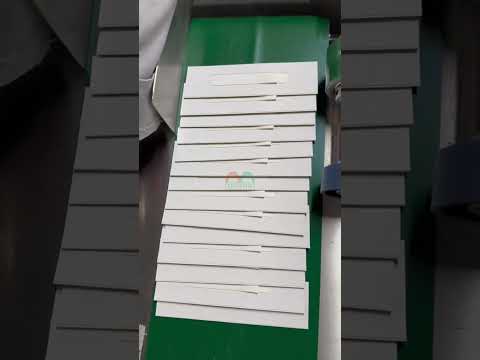
For heavy-duty box carrying handles, metal wire and fabric reinforcements are embedded into the handle core or wrapped around mounting points to prevent tearing under high load stress. Metal wire, typically steel or galvanized iron, is molded into the handle’s base to distribute tension across a wider surface area, reducing failure at the attachment holes. Fabric reinforcements—often nylon or polyester webbing—are sewn or laminated into the handle strap, adding a pliable yet tensile layer that resists fraying and sudden snap during repeated lifting. This combined structure maintains rigidity while allowing slight flexibility to absorb shock.
Metal wire and fabric reinforcements integrate a rigid, load-spreading core with a flexible, abrasion-resistant outer layer, ensuring box carrying handles withstand high repetitive tension without deformation.
Durability Testing: Load Limits and Weak Points

Durability testing for a box carrying handle focuses on establishing load limits and identifying weak points. Static load tests apply increasing weight until handle failure, typically measuring breakage at the handle’s attachment points or center span. Dynamic tests simulate repeated lifting, revealing stress concentrations where the handle meets the box surface, often the first failure zone. Fatigue cycling exposes material degradation at rivets or welded joints. These tests determine the maximum safe weight and highlight design flaws—such as sharp corners or thin wall sections—that initiate cracking under load. Results guide material thickness and reinforcement placement to prevent catastrophic failure during use.
Drop Test Standards for Single and Dual Handling Systems
Drop test standards for box carrying handles differentiate impact severity based on handling system type. A single-handed grip must endure a 90cm drop onto a steel plate, with the handle bearing the full weight of a packed box—simulating a dropped corner load. Dual handling systems, such as side-mounted handles, face a less severe 60cm drop since force distributes across two points. Critical structural integrity is verified through repeated drops from these heights, with handles showing no cracks or detachment. Test acceptance hinges on the handle surviving three drops without deformation that affects manual carry ergonomics.
- Single-handle systems: drop from 90cm, handle must support box weight on impact.
- Dual-handle systems: drop from 60cm, distribution reduces handle stress.
- Each handle type requires three consecutive drops without functional failure.
Failure Modes: Breakage, Stretching, and Detachment
Box handle failure modes typically follow a clear progression. First, stretching occurs in nylon or polypropylene webbing when overloaded, causing permanent elongation that sags the handle and reduces grip efficiency. Next, breakage happens at stress-concentration points—such as rivet holes or stitch lines—where the material suddenly fractures under peak load. Finally, detachment results when the anchor mechanisms (staples, welds, or rivets) pull free from the box cardboard or plastic shell. This sequence is critical:
- Webbing stretches, deforming the handhold.
- Handle snaps at weak points.
- Mounts rip from the box wall.
Climate Resistance: How UV, Moisture, and Temperature Affect Grip Integrity
Prolonged UV exposure degrades polymer handles, causing micro-cracking that reduces tensile strength at the grip-to-box junction. Moisture absorption swells natural-fiber or untreated plastic handles, softening the material and creating slippage under load. High heat accelerates this weakening, while extreme cold makes rigid handles brittle, prone to snap under sudden stress. Climate-driven grip failure occurs fastest when combined UV and humidity cycles erode the handle’s surface integrity before its load limit is reached. Thermal cycling between direct sunlight and shade can produce internal stress fractures invisible to the eye.
| Climate Factor | Direct Effect on Grip Integrity |
|---|---|
| UV Radiation | Surface embrittlement and micro-fractures |
| Moisture | Swelling, softening, and reduced friction |
| Temperature Extremes | Brittleness in cold, creep deformation in heat |
Innovations in Collapsible and Retractable Handles
Modern collapsible handles for boxes have moved beyond simple slots. The latest innovations feature spring-loaded retractable handles that snap flush into the box’s side when not needed, preventing snags during stacking. A key upgrade is the telescoping grip, which extends to offer a comfortable hand clearance, especially for deeper or heavier boxes. Magnetic latching mechanisms now keep extended handles secure and wobble-free, reducing strain on your fingers. Many designs use a push-button release to collapse the handle instantly, allowing one-handed operation. The materials have shifted to reinforced nylon or aluminum cores within the handle, providing durable strength without adding noticeable weight. These practical tweaks make a box carrying handle intuitive—you simply pull, grip, and lift, with the handle vanishing back into the box when you’re done.
Space-Saving Mechanisms for Flat-Pack and Storage Scenarios
For flat-pack logistics, the handle’s space-saving mechanism is critical. A flush-mount recessed handle eliminates protruding parts, allowing boxes to lie completely flat without snagging or stacking gaps, maximizing pallet density. In storage scenarios, a handle that folds entirely into a recessed cavity prevents accidental engagement during high-density shelving, while a retractable strap mechanism collapses to near zero profile. These designs ensure the box surface remains uniform, enabling tight, stable stacking without wasted cubic space or load shifting.
Latching and Locking Systems for Secure Transport
Integrated latching and locking systems transform collapsible handles into secure transport solutions. A robust latch mechanism prevents the handle from collapsing during movement, ensuring constant load support. Positive-lock engaging systems use spring-loaded pins or cam-action clamps that audibly click into place, providing immediate user confirmation. For added security against accidental release, secondary locking features like push-button releases or rotating collars require deliberate deactivation. These systems effectively eliminate handle retraction under dynamic shifting loads during transit or stacking. This direct mechanical retention is critical for protecting box integrity and preventing product damage.
Latching and locking systems guarantee the handle remains rigidly deployed until intentionally disengaged, delivering fail-safe security for transport.
One-Handed Activation Designs for Quick Access
One-handed activation designs revolutionize box handling by eliminating the need to set down cargo. A thumb-driven latch or a simple squeeze mechanism on the handle’s spine lets users deploy a collapsible grip with one hand while their other hand steadies the load. This allows a worker to grab a box, flick a trigger, and instantly extend the handle for a secure hold—all without shifting their center of balance. The action flows naturally: press, pull, and lift. These systems are engineered for zero-hesitation response, saving seconds per box and reducing fumbling at pickup points.
- Thumb-activated release levers prevent accidental deployment during transport.
- Spring-loaded handles snap into locking position within a half-second.
- Ergonomic trigger placement on the handle’s underside supports natural finger curl.
Integration with E-Commerce and Retail Packaging
In e-commerce, integrating a box carrying handle directly into retail packaging eliminates the need for a secondary shipping box, transforming a single structure into a dispatch container and a carry-out bag. This design streamlines fulfillment by reducing packing materials, as the handle is die-cut into the corrugated board or attached as a reinforced strap during manufacturing.
A pre-attached handle turns the unboxing moment into a seamless transition from doorstep to arm, removing friction for the buyer by offering immediate portability.
For subscription boxes or multi-item purchases, the handle is strategically placed to balance weight distribution, ensuring the package remains stable during transit while staying easy to grip. The integration also protects brand packaging, as the handle is folded flat or recessed to avoid snagging on conveyor belts, preserving the entire surface for visual retail appeal.
Customer Unboxing Experience: How Handles Influence Satisfaction
A customer’s satisfaction hinges on the initial tactile interaction, where a well-designed handle transforms the unboxing from a chore into a satisfying reveal. A sturdy, comfortable grip signals product quality and care before the box is even open, preventing frustration from failed or awkward carries. The unboxing satisfaction impact is immediate: a flimsy handle creates a negative first impression, while a secure one builds anticipation. For optimal experience, follow this sequence:
- Grip Test: Ensure the handle feels substantial and ergonomic upon first touch.
- Weight Transfer: Confirm the handle smoothly supports the box’s weight without digging into fingers.
- Presentation: Check that the handle positions the box labels or branding correctly for a polished, intentional reveal.
This tactile engagement directly links handle quality to perceived product value and overall delight.
Automated Assembly Compatibility for High-Volume Production
Automated assembly compatibility for high-volume production demands handles designed for robotic pick-and-place systems and continuous glue application. The handle must integrate into a flat die-cut matrix without protruding parts, enabling high-speed automated integration with e-commerce packaging lines. Production logic follows a clear sequence: first, the handle blank is separated from its carrier web via servo-driven punch tools. Second, a precision glue nozzle applies hot-melt adhesive along designated fold points. Third, robotic arms fold and seat the handle onto the rigid box blank concurrently. Finally, vision sensors verify alignment before stacking for pack-out. Each step requires tolerances under 0.5mm to prevent jams.
- Servo punch separates handle blank from carrier web
- Precision glue nozzle applies hot-melt along fold points
- Robotic arms fold and seat handle onto box blank
- Vision sensors verify alignment for jam-free stacking
Branding Opportunities: Custom Colors, Logos, and Textured Patterns
The box carrying handle itself becomes a canvas for distinctive brand expression through custom colors, logos, and textured patterns. A handle can be molded in your exact Pantone shades, while debossed or embossed logos turn a functional grip into a tactile logo placement. Textured patterns—like leather grains or geometric grids—add grip and a premium feel that static prints cannot match. A matte finish with a micro-ribbed pattern can silently communicate luxury while reducing slippage during transport. These elements allow the handle to reinforce brand identity with every carry, transforming a structural component into a deliberate branding touchpoint without additional secondary packaging.
| Branding Element | Primary Impact | User Perception Shift |
|---|---|---|
| Custom Color | Immediate visual brand recognition | “This is a known, trusted product” |
| Embossed/Debossed Logo | Permanent, premium tactile branding | “This feels substantial and quality-crafted” |
| Textured Pattern | Added grip & visual depth | “This handle is both functional and designed” |
Safety Considerations Across Different Industries
In warehousing and logistics, safety considerations across different industries for a box carrying handle center on load balance and grip. A poorly placed handle on a heavy box can cause wrist strain or dropped loads, risking foot injuries. In food service, handles must be sealed to prevent contamination and be non-slip when wet, reducing slips. Manufacturing environments require handles rated for dynamic loads and sharp edges, preventing cuts from a broken handle. For chemical transport, the handle must resist corrosion and provide a secure hold through gloves, minimizing contact with hazardous contents. Across all sectors, the handle’s ergonomic design—such as padded or contoured grips—directly reduces repetitive strain injuries, making it a critical point of box carrying handle safety.
Smooth Edges and Child-Proof Features in Consumer Goods
For box carrying handles, smooth edges and child-proof features are non-negotiable for user safety. Handles must have fully rounded, burr-free contours to prevent cuts and scrapes during repeated grasping. Child-proof locking mechanisms on telescoping or foldable handles prevent accidental collapse that could pinch small fingers. Rounded attachment points where the handle meets the box eliminate hazardous crevices. These design choices ensure that even when children interact with the box, the handle poses no laceration or entrapment risk.
Smooth edges and child-proof features in box carrying handles eliminate sharp surfaces and pinch points, creating a safe grasping interface for all users.
Industrial-Grade Handles for Chemical or Hazardous Material Containers
Industrial-grade handles for chemical or hazardous material containers are engineered from corrosion-resistant alloys or high-density polyethylene to withstand reactive compounds and extreme temperatures. Secondary containment compatibility ensures handles integrate with spill-proof lids and drum liners, preventing leaks during transport. Ergonomic designs distribute weight evenly to reduce operator strain when maneuvering heavy, volatile loads. Sealed pivot points and non-sparking materials are critical where flammable vapors or acidic residues may accumulate. Surface finishes resist degradation from solvents, and load ratings exceed standard box handles to accommodate dense hazardous payloads without structural failure.
Industrial-grade handles prioritize corrosion resistance, spark prevention, and secure load distribution for safe chemical and hazardous material transport.
Anti-Slip Coatings and Textured Surfaces for Wet Environments
For box carrying handles in wet environments, applying anti-slip coatings for wet handles provides essential grip. Textured surfaces, such as diamond or crosshatch patterns molded directly into the handle, disrupt water film that causes slippage. Rubberized or polyurethane coatings add friction even when saturated, preventing hand movement under load. Micro-embossed finishes increase surface area contact without sharp edges, while hydrophilic coatings wick moisture away from the grip zone. These modifications reduce the risk of dropping boxes due to lost traction on wet fingers.
Q: Why apply textured surfaces rather than smooth coatings on wet handles?
A: Textured surfaces create microscopic channels for water to escape, maintaining direct skin-to-handle contact, whereas smooth coatings can become slick when water creates a continuous lubricating layer between the hand and the grip.
Regulatory Standards and Certification Guidelines
When choosing a box carrying handle, regulatory standards and certification guidelines ensure the handle won’t snap under expected loads. For example, ASTM D4169 often dictates drop and vibration tests that apply to the handle as part of the entire package. A critical detail is the safety factor required for the handle’s attachment points, meaning rivets or glue must hold up to at least three times the box’s projected gross weight. ISO 2248 also might demand a specific drop height that tests the handle’s integrity on impact. Certification seals from bodies like ISTA or TÜV verify these standards were met, so look for them to confirm the handle’s safety before design sign-off.
ASTM and ISO Norms for Handle Performance Metrics
When evaluating a box carrying handle, ASTM and ISO performance metrics dictate rigorous pass/fail thresholds for real-world abuse. ASTM D5748 focuses on sudden impact resistance, mimicking a handle snapped under lateral or vertical stress during a drop. ISO 21898, by contrast, emphasizes cyclic fatigue, where the handle must withstand thousands of repetitive pulls without tearing from its anchor points. These norms also specify exact load-application angles—often 45 degrees for side pulls—and require a minimum static load hold time of 60 seconds with zero structural failure. Designs must simultaneously meet ASTM’s abrupt-force criteria and ISO’s endurance demands to claim dual compliance.
| Metric Aspect | ASTM D5748 | ISO 21898 |
|---|---|---|
| Primary Focus | Sudden impact force (drop & snap) | Sustained cyclic fatigue (repeated pulls) |
| Load Angle | 45° lateral & vertical | 45° standard pull |
| Static Hold Time | 60 seconds minimum | 60 seconds minimum |
| Failure Criteria | Any tear or detachment | Any tear or detachment |
Compliance with Food and Pharmaceutical Packaging Regulations
Compliance with food and pharmaceutical packaging regulations demands that box carrying handles are manufactured from materials certified as non-toxic and resistant to microbial contamination. Handles must not shed particulates or leach chemicals that could compromise product integrity. Every design iteration must include validation testing for regulatory-compliant handle materials, ensuring seal security and load-bearing capacity without compromising the hermetic barrier. Surface finishes must be smooth and cleanable to prevent residue entrapment. Only handles passing these rigorous material and structural tests are approved for direct contact packaging, guaranteeing consumer safety from factory to point of use.
Weight Capacity Labeling and User Safety Warnings
Weight capacity labeling on a box carrying handle must be permanently affixed, typically displaying the maximum load in kilograms and pounds to prevent overloading. User safety warnings should explicitly state risks such as handle failure under excessive weight, using standardized pictograms for non-verbal comprehension. Labels must remain legible after repeated handling, with durable weight capacity marking integrated into the handle or adjacent surface. Warnings also caution against improper grip or single-point lifting, ensuring the user distributes weight evenly across the handle’s design limits.
Weight capacity labeling sets a clear, visible load limit; user safety warnings communicate failure risks and correct handling to prevent injury.
What Exactly Is a Box Carrying Handle and How Does It Work?
Defining the Core Function of a Carry Grip
Common Materials Used in Handle Construction
Mechanisms: Fixed vs. Retractable vs. Snap-On Designs
Key Features to Look for in a Box Handle
Weight Capacity and Reinforcement Points
Ergonomics: Padding, Grip Texture, and Contour Shapes
Attachment Methods: Adhesive, Bolt-On, or Slot Insert
Practical Benefits of Adding a Carry Handle to Your Box
Reducing Strain on Hands and Fingers During Transport

Improving Load Balance and Control for Heavy Items
Extending the Lifespan of Box Edges and Corners
How to Choose the Right Carrying Handle for Your Container
Matching Handle Size to Box Dimensions and Weight

Selecting Between Plastic, Metal, or Fabric Grips
Considering Weather Resistance for Outdoor or Cold Storage Use
Installation Tips and Common User Questions

Step-by-Step Guide to Installing a Handle Securely
Can You Install a Handle on an Existing Corrugated Box?
What to Do if the Handle Feels Loose or Unstable
